


Choosing the right exercise bike can be a challenge, particularly given the number of models and options available these days. Whether you're new to cycling or an experienced athlete, it helps to understand which factors affect the price and performance of an exercise bike. In this article we cover the most important things to look for when buying one.
What is an exercise bike?
An exercise bike is a piece of fitness equipment designed specifically for indoor cycling. It offers an efficient way to do cardiovascular work without depending on the weather or worrying about traffic. Exercise bikes are popular with people wanting to improve their fitness, lose weight or rehabilitate after injury.
A typical exercise bike consists of a sturdy frame, a saddle, pedals and handlebars, much like a normal bicycle. The saddle and handlebars are usually adjustable to accommodate users of different heights. Modern exercise bikes often come with advanced features such as digital displays showing distance covered, calories burned, speed and heart rate. Some models also offer programmable training programmes and adjustable resistance levels so you can vary the intensity of your session.
Exercise bikes suit people at any fitness level. Beginners can start gently with light sessions, while more advanced users can follow more demanding programmes. Using an exercise bike helps strengthen the leg muscles, improve heart health and build endurance. It's also an excellent option for anyone who'd rather train at home than go to a gym.
The benefits of using an exercise bike
Using an exercise bike brings a range of benefits, physical and mental alike. Here are some of the most important:
1. Better cardiovascular health
Using an exercise bike regularly helps strengthen the heart, improve circulation and lower blood pressure. That can reduce your risk of cardiovascular disease.
2. Weight loss and calorie burning
Cycling on an exercise bike is an effective way to burn calories and lose weight. Depending on the intensity and duration of your session, you can burn a considerable amount.
3. Building muscle
An exercise bike helps strengthen the leg muscles, including the quadriceps, hamstrings, calves and glutes. Some models with adjustable resistance can also contribute to strengthening the core muscles.
4. Low impact on the joints
Compared with other forms of cardiovascular exercise such as running, cycling on an exercise bike places little impact on the joints. That makes it an excellent option for anyone with joint problems or recovering from injury.
5. Convenience and accessibility
An exercise bike lets you train at any time of day, whatever the weather or the season. That makes it a practical option for busy schedules.
6. Safety
Unlike cycling outdoors, where traffic can be a concern, an exercise bike offers a safe environment for training. There's no risk of accidents caused by traffic or poor weather.
7. Mental health
Physical activity such as cycling on an exercise bike can help reduce stress, lift your mood and ease symptoms of anxiety and depression through the production of endorphins, the so-called "happiness hormone".
8. Ease of use
Modern exercise bikes often come with user-friendly features such as digital displays and programmable sessions, so you can track your progress and stay motivated.
How many calories does an exercise bike burn per hour?
The number of calories you burn on an exercise bike varies depending on factors including your bodyweight, age, sex, training intensity and duration. Broadly speaking:
- Light intensity: at a light training intensity, such as easy cycling, a person of average weight (around 70 kg) burns roughly 400-500 calories an hour.
- Moderate intensity: at a moderate intensity, where you're working harder but can still hold a conversation, the same person burns roughly 500-700 calories an hour.
- High intensity: at a high intensity, such as interval training or pedalling hard, that can rise to 700-1,000 calories an hour for someone of average weight.
Heavier people burn more calories, because they need more energy to perform the same activity. Conversely, lighter people burn fewer.
The resistance setting on the bike also affects your calorie burn. Higher resistance demands more effort and leads to a higher expenditure.
Which muscles does an exercise bike work?
An exercise bike mainly trains the following muscles:
- Quadriceps: the muscles at the front of the thighs, used in pedalling.
- Hamstrings: the muscles at the back of the thighs, active during the upward phase.
- Calves: the muscles at the back of the lower legs, involved in the pedal stroke.
- Glutes: used for stabilisation and for power during pedalling.
- Hip flexors: the muscles in the hips, involved in lifting the legs.
The core muscles (abdominals and lower back) are also engaged for balance and stabilisation.
How much space does an exercise bike take up?
The space an exercise bike takes up varies by model and type. Standard exercise bikes usually measure roughly 100-150 cm long, 50-60 cm wide and 120-140 cm high. That means you'll need around 1.5 square metres for a non-folding exercise bike, including some extra room around it for comfort and safety.
Folding exercise bikes
Folding exercise bikes are designed for people short on space. These models fold away easily after use and can be stored. While in use, folding bikes have much the same dimensions as non-folding ones. Once folded, though, they take up considerably less room, often only 50-70 cm long, 40-50 cm wide and 120-140 cm high. That makes them easy to store in a cupboard, under a bed or in the corner of a room.
Planning your space
When planning space for an exercise bike, allow extra room for freedom of movement and ventilation. A spot by a window or somewhere with good air circulation makes training more pleasant. For folding models, it helps to have easily accessible storage.
How important is the saddle on an exercise bike?
The quality of the saddle on an exercise bike matters enormously for comfortable, effective training. Here's why a good one is essential:
1. Comfort
A well-designed saddle prevents discomfort and pain during long sessions. Comfortable saddles often have extra padding or ergonomic shaping that reduces pressure on the sit bones and the perineal area.
2. Preventing injury
A poor saddle can lead to painful sit bones, saddle soreness and even chronic problems such as nerve compression. A quality saddle supports a good riding position and helps prevent injury.
3. Support during longer sessions
For anyone doing longer sessions, a comfortable saddle is crucial to reducing fatigue and discomfort. That helps you stick with the session and reach your fitness goals.
4. Adjustability
Quality saddles are usually adjustable for height and horizontal position, so they can be set up for different body types and personal preferences. That gives you an optimal pedalling technique and better efficiency.
5. Motivation and consistency
A comfortable saddle makes training more enjoyable, which raises your motivation to keep going. If the session is comfortable, you're far more likely to maintain a consistent routine.
How does an exercise bike compare with other cardio machines for intensity?
A session on an exercise bike can be extremely demanding and compares well with other cardio machines such as treadmills, cross trainers and rowing machines. The intensity depends on various factors including resistance level, speed and training programme.
Compared with other machines:
-
Treadmills: running or sprinting on a treadmill delivers high intensity because the whole body is involved. That said, cycling on an exercise bike can offer comparable cardiovascular benefits without the impact on your joints.
-
Cross trainers: these give you a full-body workout by using the arms as well as the legs. Although an exercise bike mainly trains the legs, you can raise the intensity by adjusting the resistance and adding interval work.
-
Rowing machines: rowing offers a highly demanding workout that recruits a great many muscle groups. An exercise bike can achieve a comparable cardiovascular effect, particularly at high resistance and with speed intervals.
Raising the intensity on an exercise bike:
- Resistance: increase the resistance to make your muscles work harder.
- Speed: interval training, alternating fast and slow cycling, raises the intensity.
- Duration: longer sessions at a higher intensity contribute to a demanding workout.
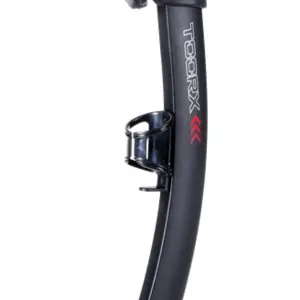
The frame: the backbone of the bike
One of the first things to look at when buying an exercise bike is the frame. It determines not just how durable the bike is, but the maximum user weight it can carry. Here's what to check:
- Sturdiness and stability: check that the frame is solid and stable. A stable frame reduces the chance of wobbling during hard sessions.
- Maximum user weight: this tells you how robust the bike is. Models with a higher maximum user weight are generally more durable.
- Finish: pay attention to how the frame is finished, including any extra coating on the handlebars and the thickness of the saddle. These details can improve both the comfort and the lifespan of the bike.
- Low step-through: bikes with a low step-through frame are easier to get onto for anyone with limited mobility. That does add to production costs, though, and can raise the price.
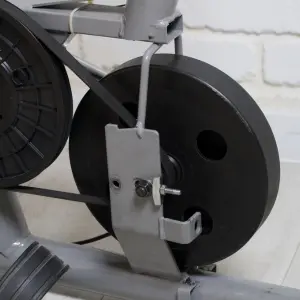
The flywheel: the engine of the bike
The flywheel plays a crucial role in how an exercise bike works. Its weight and rotating mass determine how smoothly the bike moves. A few considerations:
- Flywheel weight: a heavier flywheel gives you a smoother, more stable motion. That used to be the most important factor, but these days the point of inertia matters too, particularly on bikes with a magnetic brake.
- Rotating mass: the rotating mass, influenced by where the magnetic brake meets the flywheel, is a decisive factor in how smooth the movement feels. It isn't always clearly stated for every model, though.
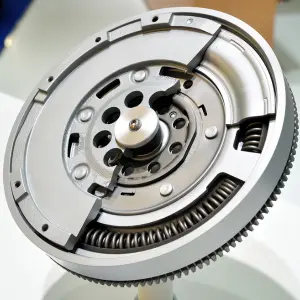
The resistance system: control over your session
The type of resistance system directly affects both the user experience and the price. There are three main types:
- Manual brake: the cheapest system, where you adjust the resistance by hand with a dial.
- EMS (Electro Magnetic System): this uses electromagnets to adjust the resistance. You can change it using buttons on the console, and there are often programmes that adjust the resistance automatically.
- Ergometer: this type displays wattage and is often used for rehabilitation. There are two kinds: one that only displays the wattage, and one you can set to a specific wattage. The latter are the most expensive and are used mainly for physiotherapy.
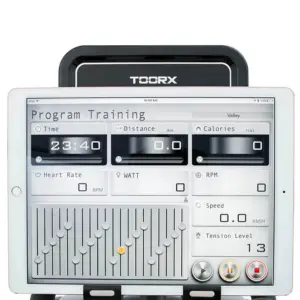
Programmes and resistance levels: variety and challenge
The number and variety of programmes and resistance levels an exercise bike offers can affect the price considerably. The more programmes and resistance levels, the higher the price. Advanced consoles often offer extra features such as:
- USB ports: for charging devices or playing media.
- Speakers: for entertainment while you train.
- Mini fans: for extra comfort during hard sessions.
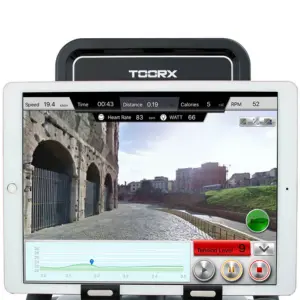
Apps and connectivity: modern conveniences
Plenty of modern exercise bikes are compatible with various fitness apps, which can make training more rewarding. These apps often offer:
- Interactivity: the ability to track and analyse your sessions.
- Virtual routes: simulating rides in different environments.
- Social connections: competitions and challenges with friends or an online community.

Conclusion
When buying an exercise bike, it's important to look carefully at the frame, the flywheel, the resistance system, the programmes and the connectivity. Weigh these up thoroughly and you can choose a bike that fits your needs and your budget perfectly. Don't forget that the most expensive bike isn't always the best choice; what matters is what works for your own training goals and circumstances.
We'd be glad to help you work out which exercise bike best suits your goals and situation.
Send us a message via the chat, or get in touch using one of the options below:
Call us during office hours on: 0165-512603 from the Netherlands or 0031165-512603 from abroad.
Email us at: info@nrgfitness.nl.


