


Firm, well-shaped glutes are an aesthetic and functional goal for plenty of people at the gym. The glutes are one of the largest and most powerful muscle groups in the human body. Strong glutes matter not just for your shape – they play a crucial role in stabilising the hips, supporting the lower back and improving your overall athletic performance. In this article we cover some of the best exercises for training the glutes, from bodyweight movements through to work with weights and machines.
The glutes explained
The glutes consist of three main muscles: the gluteus maximus, gluteus medius and gluteus minimus. The gluteus maximus is the largest of the three and sits at the back of the hip joint. It's responsible for extending the hips, which is essential to movements such as walking, running, jumping and squatting. The gluteus medius and minimus sit at the outside of the hip joint and play an important role in stabilising the hips and preventing lateral movement. Strong glutes don't just improve your shape and increase your strength – they contribute to better posture, stability and pelvic mobility.
How many exercises do you need for stronger glutes?
To develop stronger, better-shaped glutes, we'd recommend including at least 5 to 10 different exercises in your routine. Performing a range of movements lets you recruit and develop every muscle in the region effectively. Adding variety to your programme can also stimulate muscle growth and reduce your risk of overloading and injury. It's worth remembering, though, that quality of execution matters more than quantity. Focus on using correct technique, perform each exercise slowly and deliberately, and listen to your body to avoid overloading it.
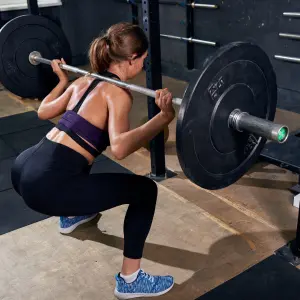
Glute exercise 1: Squats
Squats are one of the most effective exercises for developing strong, well-shaped glutes. Start with your feet at hip width, your back straight and your knees slightly bent. Lower yourself slowly as though sitting down on an imaginary chair, keeping your weight on your heels and not letting your knees travel past your toes. Keep your chest up and your back straight as you descend, then drive yourself powerfully back up to the starting position.
Squats can be performed with bodyweight, a dumbbell in each hand, or a barbell across your shoulders. Adjust the weight to suit your strength and perform the exercise slowly and under control for maximum muscle growth and strength development.
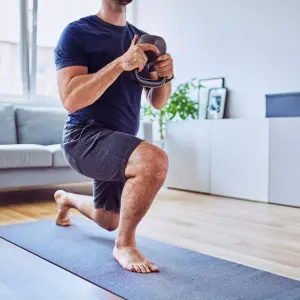
Glute exercise 2: Lunges
Lunges are an excellent exercise for isolating and strengthening the glutes while also recruiting the quadriceps and hamstrings. Start standing with your feet at hip width. Take a large step forward with your right foot and bend your knees until both are at 90 degrees, with your back knee almost touching the floor. Then drive yourself powerfully back to the starting position and repeat on the other side.
Lunges can be performed with bodyweight, a kettlebell, dumbbells in each hand or a barbell across your shoulders. Focus on a slow, controlled movement to isolate the muscles effectively and reduce your risk of injury. Vary between reverse, lateral and diagonal lunges for a complete glute session.
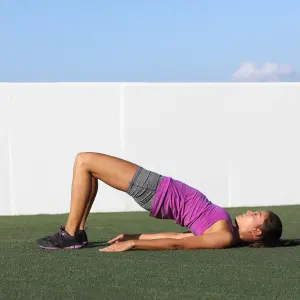
Glute exercise 3: Glute bridges
Glute bridges are an excellent isolation exercise for the glutes. Lie on your back with your knees bent and your feet flat on the floor at hip width. Engage your abdominal muscles and push your hips up towards the ceiling by squeezing your glutes together. Hold the top position for a few seconds, then lower your hips under control to the starting position.
Glute bridges can be performed with bodyweight alone or with added resistance such as a barbell or a weight plate across your hips. Focus on squeezing your glutes at the top of the movement for maximum muscle activation.
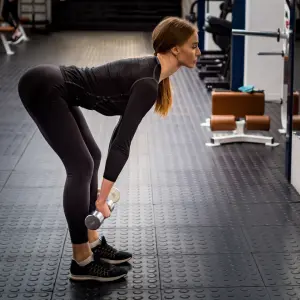
Glute exercise 4: Romanian deadlifts
Romanian deadlifts are a great exercise for strengthening the hamstrings and lower back while also activating the glutes effectively. Stand upright with a barbell in front of your thighs, your feet at hip width and your knees slightly bent. Hold the barbell with an overhand grip, your hands slightly wider than shoulder width. Hinge slowly forward from your hips while keeping your back straight, lowering the barbell along your legs to just below your knees. Squeeze your glutes as you come back up to the starting position by driving your hips forward.
Romanian deadlifts can be performed with a barbell, dumbbells or a kettlebell. Keep your back straight and avoid excessive bending or rounding through the movement to prevent injury. Perform the exercise slowly and under control for maximum muscle activation and strength development.
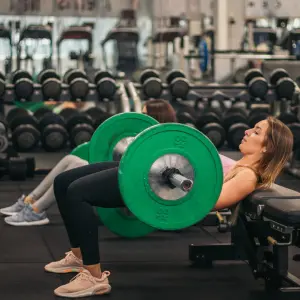
Glute exercise 5: Hip thrusts
Hip thrusts are an effective exercise for isolating and strengthening the glutes, the gluteus maximus in particular. Sit with your back against a bench or raised surface, your shoulders on the edge of the bench and your knees bent. Place a barbell or weight plate across your hips and push them up towards the ceiling by squeezing your glutes together. Hold the top position for a few seconds, then lower your hips under control to the starting position.
Hip thrusts can also be performed with bodyweight alone, or using a resistance band to increase the resistance. Focus on squeezing your glutes at the top of the movement for maximum muscle activation and strength development. There are also dedicated hip thrust machines available for this exercise, so you can concentrate fully on the movement and your execution.
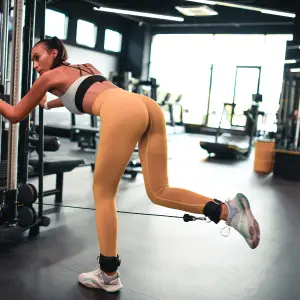
Glute exercise 6: Cable kickbacks
Cable kickbacks are an excellent exercise for isolating and strengthening the glutes, the gluteus maximus in particular. Attach an ankle strap to a low cable pulley machine and fasten it around your ankle. Stand facing the machine with your knees slightly bent. Hold the frame for stability and extend your leg backwards by squeezing your glutes. Hold the top position for a few seconds, then bring your leg back under control to the starting position.
Cable kickbacks can be performed at various resistance levels by adjusting the weight on the cable machine. Focus on a slow, controlled movement to isolate the muscles effectively and reduce your risk of injury.
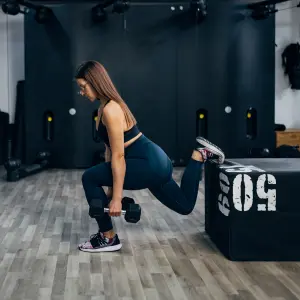
Glute exercise 7: Bulgarian split squats
Bulgarian split squats are a demanding exercise that recruits the glutes effectively, along with the quadriceps, hamstrings and core stabilisers. Start with one foot behind you on a raised platform such as a bench, and the other foot forward on the floor. Bend your knees and hips to lower your back knee towards the floor, keeping your front knee above your ankle and your back straight. Then drive yourself powerfully back up to the starting position by extending your front leg.
Bulgarian split squats can be performed with bodyweight, dumbbells in each hand or a barbell across your shoulders. Focus on a controlled movement and keep your balance throughout. Vary the height of the raised platform to change the intensity and target different parts of the glutes.
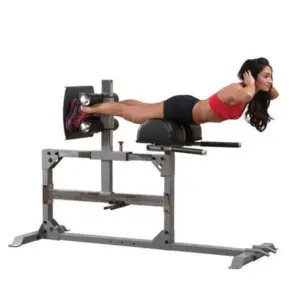
Glute exercise 8: Glute ham raises
Glute ham raises are a demanding exercise that strengthens the glutes, hamstrings and lower back. Secure your ankles under the roller pads of a glute ham developer (GHD) machine and kneel with your hips bent at 90 degrees. Lower yourself slowly forwards while keeping your body straight, then push yourself powerfully back up by squeezing your glutes. Hold the top position for a few seconds before returning under control to the starting position.
Glute ham raises demand good control and stability, so start with light resistance or even bodyweight alone. Focus on squeezing your glutes throughout the movement for maximum muscle activation.
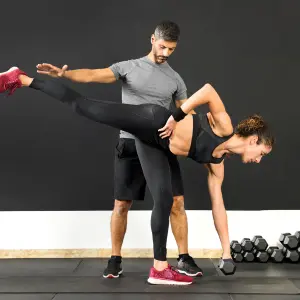
Glute exercise 9: Single-leg deadlifts
Single-leg deadlifts are a great exercise for strengthening the glutes, hamstrings and core stabilisers. Start standing with your feet at hip width and a dumbbell or kettlebell in your right hand. Lift your left leg off the floor and hinge slowly forward from your hips while keeping your right leg extended and your back straight. Let the weight hang down as you hinge forward, then drive yourself powerfully back up to the starting position by squeezing your glutes.
Single-leg deadlifts can be performed with bodyweight alone or with added resistance such as dumbbells or a barbell. Keep your back straight and your hips parallel to the floor throughout the movement to prevent injury. Perform the exercise slowly and under control for maximum muscle growth and strength development.
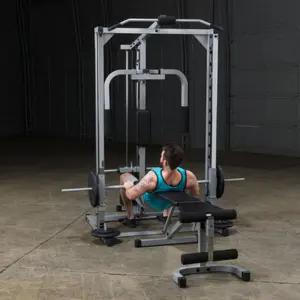
Glute exercise 10: Smith machine hip thrusts
Smith machine hip thrusts are a variation on the standard hip thrust that targets the glutes effectively. Place a bench against the front of the Smith machine and lie with your upper back on the bench and your shoulders beneath the barbell. Put a pad or a thick towel under the barbell for comfort. Plant your feet firmly on the floor and push your hips up towards the ceiling by squeezing your glutes together. Hold the top position for a few seconds, then lower your hips under control to the starting position.
Smith machine hip thrusts can be performed at various resistance levels by adjusting the weight on the barbell. Focus on squeezing your glutes at the top of the movement for maximum muscle activation and strength development. Set the bench and the height of the bar to suit your height and comfort.
Firmer glutes with the exercises above
In conclusion, these exercises offer a comprehensive approach to strengthening and developing the glutes. By combining squats, lunges, glute bridges, Romanian deadlifts, hip thrusts and the other effective movements above, you can target and stimulate every important muscle in the region. It's important to add variety to your routine and pay attention to correct technique and execution, to get the best results and avoid injury. With consistency, commitment and patience, you'll see noticeable improvements in the strength, muscle mass and overall performance of your glutes. Don't forget to listen to your body, take enough rest and adapt your programme to your own needs and goals. With this approach, you'll be well on the way to stronger, firmer, well-developed glutes.


