


Pull exercises are essential to developing a strong, muscular upper body. They target the muscles of the back, biceps and shoulders above all. Whether you're a seasoned athlete or new to strength training, adding pull exercises to your routine will help you build balance, strength and muscle mass. In this article we cover the best pull exercises, which muscle groups they work, the equipment best suited to them and how many exercises you need to get stronger.
Which muscle groups do pull exercises work?
Pull exercises target several muscle groups, including the latissimus dorsi, trapezius, rhomboids, biceps and rear deltoids.
The latissimus dorsi, or lats, are the broad muscles running along the sides of your back. They're responsible for pulling your arms down and back. Well-developed lats give your back a V-shaped look and help with plenty of everyday movements.
The trapezius is a large muscle running from the base of your skull to the middle of your back and from shoulder to shoulder. It's involved in shrugging the shoulders and stabilising the shoulder blades. Training it helps improve your posture and reduce neck and shoulder problems. The rhomboids sit between your shoulder blades. They help draw the shoulder blades together and play an important part in posture and shoulder stability. Strong rhomboids contribute to better shoulder mobility and stability.
The biceps sit at the front of your upper arms and are responsible for bending the elbow. Pull exercises such as chin-ups and rows are excellent for developing strong, muscular biceps.
The rear deltoids are the muscles at the back of your shoulders. They help pull your arms back and play an important role in stabilising the shoulder joint. Training them helps develop a balanced, strong shoulder complex.
Which equipment works best for pull exercises?
There are various machines and tools you can use to make your pull training effective:
-
Pull-up bar
Ideal for pull-ups and chin-ups, and essential in any home gym. -
Cable machine
Versatile and perfect for exercises such as lat pulldowns and seated rows. -
Barbells and dumbbells
Suitable for bent-over rows and other variations. -
Resistance bands
Excellent for beginners and for adding variety to your routine. -
TRX or suspension trainer
For bodyweight rows and other demanding exercises.
How many pull exercises do you need to get stronger?
For the best results, aim for three to five different pull exercises per session, each for three sets of 8-12 reps. That strikes a good balance between volume and intensity, which is essential to muscle growth and building strength. Vary your routine regularly to avoid plateaus and develop every muscle group evenly.

Pull exercise 1: Pull-up
The pull-up is a classic and highly effective exercise for training the latissimus dorsi, biceps and trapezius. Start by hanging from a pull-up bar with an overhand grip at shoulder width. Pull yourself up until your chin clears the bar, then lower yourself back to the starting position under control.
Pull-ups are excellent for building strength and muscle mass in your upper body. They can be demanding, particularly for beginners, but with consistency and progression you can master them.

Pull exercise 2: Chin-up
The chin-up is similar to the pull-up but uses an underhand grip, which puts more emphasis on your biceps. Hang from a pull-up bar with an underhand grip at shoulder width. Pull yourself up until your chin clears the bar, then lower yourself under control.
This exercise is an excellent way to train your biceps and back muscles together. Chin-ups are often slightly easier than pull-ups, which makes them a good variation to include in your routine.

Pull exercise 3: Bent-over row
The bent-over row is a superb exercise for training your lats, rhomboids and trapezius. Stand with your feet at shoulder width and hold a barbell with an overhand grip. Hinge forward from your hips until your torso is almost parallel to the floor. Pull the barbell towards your navel, then lower it under control.
This exercise helps develop a broad, thick back. Keeping your back straight and squeezing your shoulder blades together throughout the movement is important for avoiding injury and getting the best results.
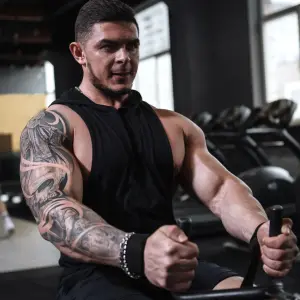
Pull exercise 4: Seated cable row
The seated cable row is a versatile exercise targeting the lats, trapezius and rhomboids. Sit at a cable machine with a row attachment, with your feet firmly on the footplates. Take the handle and pull it towards your stomach while squeezing your shoulder blades together. Let the cable return to the starting position under control.
This exercise is excellent for improving your posture and developing a strong, muscular back. Using a cable machine keeps constant tension on the muscles, which contributes to growth and strength.

Pull exercise 5: Lat pulldown
The lat pulldown is an excellent exercise for training the lats and upper back. Sit at a lat pulldown machine and take the bar with a wide overhand grip. Pull it down to your chest while squeezing your shoulder blades together, then let it return to the starting position under control.
This exercise is ideal for isolating your lats and building width in your back. It's a good alternative to pull-ups, particularly if you find lifting your own bodyweight difficult.

Pull exercise 6: Dumbbell row
The dumbbell row is an effective exercise for training your lats, trapezius and rhomboids. Place your knee and hand on a bench for support and hold a dumbbell in the other hand. Pull the dumbbell towards your side while squeezing your shoulder blade, then lower it under control.
This exercise is excellent for developing a strong, muscular back. Using dumbbells means you train each side separately, which helps correct any imbalances between them.

Pull exercise 7: T-bar row
The T-bar row is an effective exercise for training your lats, trapezius and rhomboids. Wedge one end of a barbell into a corner, or use a T-bar row machine. Hold the other end with both hands in a V-grip. Bend your knees and keep your back straight. Pull the barbell towards your chest while squeezing your shoulder blades together, then lower it under control.
This exercise offers a different movement pattern from traditional rows and helps develop a broad, thick back. It also places less strain on the lower back, which makes it a good option for anyone with back problems.
Building a stronger upper body with these pull exercises
Adding pull exercises to your training routine is essential to developing a strong, balanced physique. By doing these exercises regularly and varying your routine, you can build strength and muscle mass. Don't forget to use the correct technique and give your body time to recover for the best results. With consistency and commitment you'll find your back, biceps and shoulders getting stronger and more muscular.


