


Training your back is essential to a strong, balanced physique. A well-developed back doesn't just look impressive – it plays a crucial role in improving your posture and preventing injury. Barbells are an excellent tool for training the back effectively, because they let you use heavy weights and perform compound movements. In this article we cover the best barbell exercises for your back, look at the anatomy of the back muscles, and explain why a strong back matters.
About the back muscles
The back is a complex, powerful muscle group made up of several important muscles. The main ones are the latissimus dorsi, trapezius, rhomboids and erector spinae. By training all of these, you can develop a strong, healthy back that stands up to heavy loading and resists injury.
The benefits of a strong back
Strong back muscles bring plenty of benefits, in everyday life and in sport alike. Some of the most important:
-
Better posture
Strong back muscles help you maintain good posture, which is essential to preventing back pain and injury. -
More strength and stability
A strong back gives you more power and stability during physical activities such as lifting, pushing and pulling. -
Less back pain
Strengthening your back muscles reduces the pressure on your spine and lowers your chance of back pain. -
Better athletic performance
Strong back muscles improve your performance in sports and activities including weightlifting, rowing and climbing.
How many exercises do you need for a stronger back?
To strengthen your back effectively, we'd recommend three to five different exercises per session. Try to train your back at least twice a week, performing each exercise for three sets of 8-12 reps. Variety matters for working every part of the back and stopping your muscles getting used to the same routine.

Back exercise 1: Barbell deadlift
The barbell deadlift is one of the best exercises for training the back, particularly the erector spinae, lats and trapezius. Start with the barbell on the floor in front of your feet. Keep your feet at hip width and bend your knees. Take the barbell with an overhand or mixed grip. Keep your back straight and lift the barbell by driving your hips forward and extending your knees. Lower it back to the starting position under control.
The deadlift is a compound exercise that recruits several muscle groups, which contributes to the overall strength and stability of your back. Using the correct technique is important for avoiding injury and getting the best results.

Back exercise 2: Barbell bent-over row
The barbell bent-over row is an excellent exercise for training your lats, rhomboids and trapezius. Stand with your feet at shoulder width and bend your knees slightly. Hinge forward from your hips until your torso is almost parallel to the floor. Hold the barbell with an overhand grip and pull it towards your navel, squeezing your shoulder blades together. Lower it back to the starting position under control.
This exercise helps develop a broad back while also improving your posture. Make sure your back stays straight throughout to avoid injury.

Back exercise 3: Barbell Pendlay row
The barbell Pendlay row is a variation on the bent-over row in which the barbell returns to the floor after every rep. Stand with your feet at shoulder width and bend your knees slightly. Hinge forward from your hips until your torso is almost parallel to the floor. Hold the barbell with an overhand grip and pull it explosively towards your navel. Lower it back to the floor under control and repeat.
This exercise helps develop explosive power and strength in the lats and mid-back. Returning the barbell to the floor after each rep means you can perform every repetition with maximum effort.

Back exercise 4: Barbell T-bar row
The barbell T-bar row is an effective exercise for training your lats, rhomboids and trapezius. Wedge one end of a barbell into a corner, or use a T-bar row machine. Hold the other end with both hands in a V-grip. Bend your knees and keep your back straight. Pull the barbell towards your chest, squeezing your shoulder blades together. Lower it back to the starting position under control.
This exercise offers a different movement pattern from traditional rows and helps develop a broad, thick back. It also places less strain on the lower back, which makes it a good option for anyone with back problems.

Back exercise 5: Barbell shrug
The barbell shrug is an isolation exercise targeting the trapezius. Stand upright with your feet at shoulder width and hold a barbell with an overhand grip in front of your thighs. Pull your shoulders up towards your ears, hold briefly, then lower them under control.
This exercise helps develop strong, well-shaped trapezius muscles. Performing the movement under control and not swinging the barbell are both important for maximising the tension on the traps.
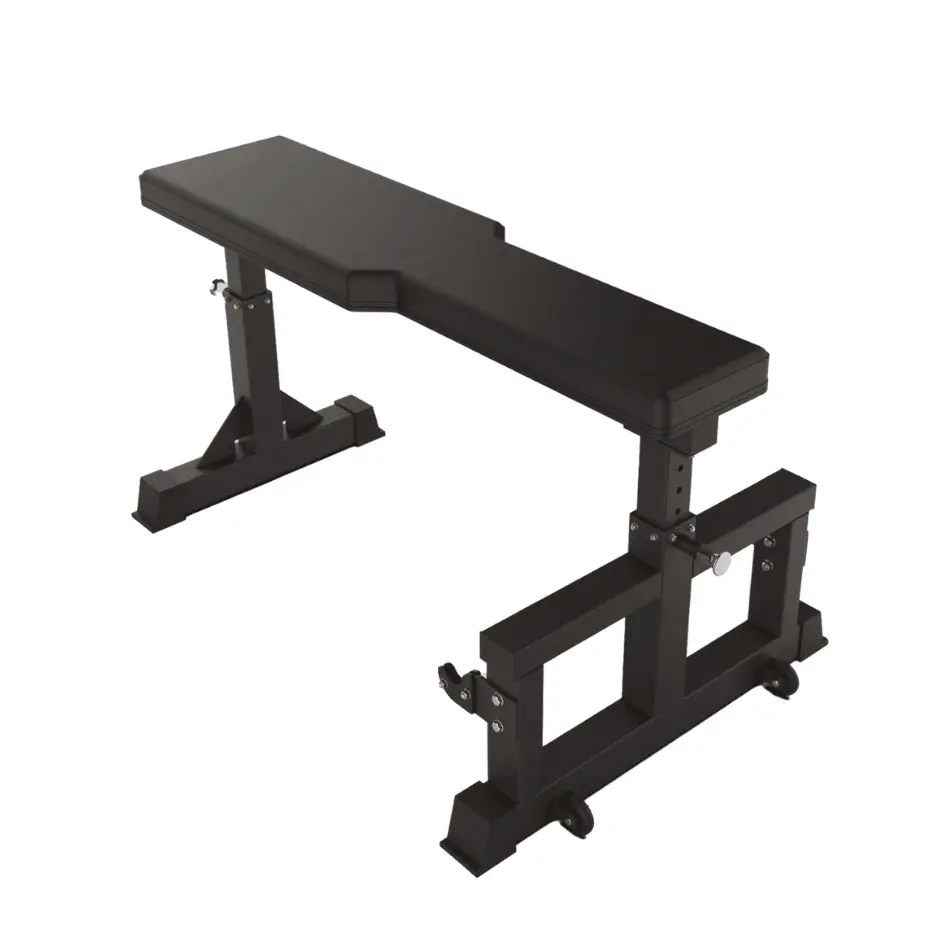
Back exercise 6: Barbell seal row
The barbell seal row is a distinctive exercise that trains your lats, rhomboids and trapezius effectively without loading your lower back. Lie face down on a weight bench with a barbell underneath it. Pull the barbell towards your chest, squeezing your shoulder blades together. Lower it back to the starting position under control.
This exercise is ideal for isolating the back muscles and minimising the load on your lower back. It's an excellent addition to your back training, particularly if you suffer from lower back problems.
Conclusion
Training your back with barbells is an effective way to build strength, stability and muscle mass. By adding these exercises to your routine regularly, you can develop strong, well-developed back muscles. Don't forget to bring enough variety into your sessions and perfect your technique for the best results. Strong back muscles aren't just essential to athletic performance – they improve your posture and stability too.


